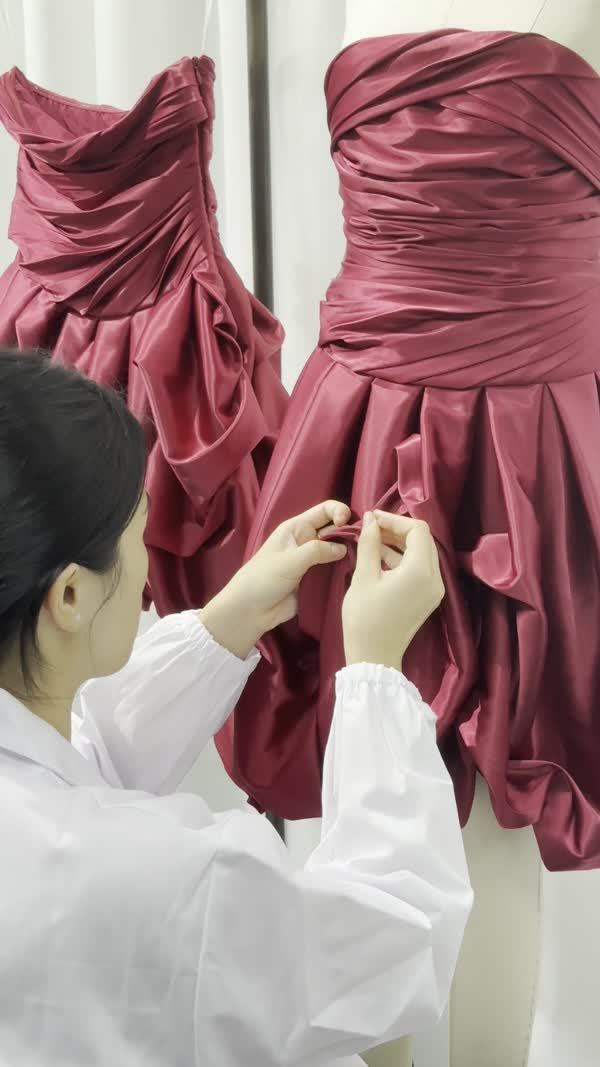
A small batch clothing manufacturer reads six styles and one ship date as a scheduling problem, not a price problem. Six styles at 30 pieces is 180 garments, which is one month on a single line. It is not six months of work.
The saving is real, and it is not where brands expect it. Sampling six styles in one round costs less than six separate rounds, because the pattern room sets up once. Bulk barely gets cheaper at all, because the sewing minutes are per garment.
Here is the calendar we run for a first collection, the two places it breaks, and which styles we would cut from the range before we cut them from the plan.
Why six styles cost less to sample than six separate orders
Pattern work is $95 to $160 a style, whether you send one style or six. Six at once is still six sets of blocks, but the grading, the marker and the fit session happen in one pass instead of six.
The mock-up is where the money repeats. Two rounds per style at $85 to $140 a sample is $1,020 to $1,680 across six styles. Run them as one round and the sample room books nine days once rather than nine days six times.
That is roughly 22% off the sampling total, and it comes from queue time, not from anyone working faster.
The sample calendar for six styles in 11 weeks
Week 1: tech packs or reference garments in, questions out. Week 2: patterns and first mock-ups cut. Weeks 3 and 4: round one fittings, three styles a session.
Weeks 5 and 6: corrections cut and sewn. Weeks 7 and 8: round two fittings, and the decisions nobody enjoys. Week 9: counter sample and fabric confirmation.
Weeks 10 and 11: bulk fabric in, cutting, and the first bundles on the line. If a style slips past week 8, it ships in the next window, not this one.
Shared fabric: where six styles save and where they don't
Two fabrics across six styles is the efficient shape. It clears a 100-metre mill minimum with less dead stock, and it keeps one dye lot for everything that has to match.
Six fabrics across six styles is the shape that eats a first collection. You buy six minimums, you store six leftovers, and you carry six shade risks into a range that a buyer will see side by side.
Where sharing fails is weight. A 110 GSM viscose that drapes a slip dress will not hold a tailored trouser. Forcing one fabric across both gives you a trouser with no shape and a dress with no movement.
Two mock-up rounds, six styles: the queue problem
The queue is the part brands never plan for. A sample room runs a limited number of fittings a day, and your six styles are behind another brand's nine.
We book the fitting slots before cutting anything. Six styles at three per session is two sessions, and if you cannot attend one, the whole round waits 9 days, which is what happened to a brand in 2021.
That brand lost three weeks to a holiday, then shipped 40 of 180 pieces by air to save the launch. The air freight cost more than the fabric.
What we cut first, and why it is never the hardest style
We cut the simplest style first, always. A straight-cut dress or a plain trouser proves the fabric, the thread, the needle and the operator before anything complicated reaches the table.
The hardest style goes third or fourth, once the line has found its rhythm. A bias-cut slip as style one means every later problem gets blamed on the bias.
If the simplest style is already wrong, the other five will be wrong in the same way, and you will have found it for $140 instead of $1,400.
Grading six styles without six fit models
One fit model, one set of measurements, six styles. That is enough for a first collection, and it is what most independent brands actually do.
Grading from a single fit is where extended sizes break. If your range stops at L, one model is fine. If it reaches XXL, budget a second fitting on the largest size, because a 4 cm bust increment assumed from a size M body is a guess.
We publish the five numbers we fit to, and we tell you which styles we would not grade past L without a second body in the room.
The 30-piece floor: which styles to drop
Not every style survives 30 pieces. Pleating, screen print, custom embroidery and garment dye all carry minimums that a 30-piece run cannot clear without paying for the excess.
Our rule is simple: if a style needs a process with a 100-piece minimum, it does not belong in a first collection of six. It belongs in collection two, when you have a reorder to attach it to.
Dropping one style from six is a 17% cut in sampling cost and a 30% cut in decision fatigue. It is also the change most brands resist and later thank us for.
Start with the styles that share a fabric
Send six styles, or four, with the fabric grouped and the ship date named. We will come back with a sample calendar, a fitting schedule and the styles we would move to a second round.
Our small batch programme exists for ranges this size, and it runs on the same three processes as a 3,000-piece order. The FAQ covers mock-up rounds and sample fees, and the case studies include a six-style debut that shipped in one window.
Our A1 production assistant, still in training and coming online later this year, is being taught to flag a style that cannot clear a mill minimum before the pattern is cut.
Go deeper: why mock-up rounds come back wrong · why size 8 fits and size 14 does not · the mock-up queue, and why yours waits
Questions we get about this
Can I sample six styles at once with a 30-piece minimum each?
Yes, and it is cheaper than six separate rounds because the pattern room and the fitting sessions run once. Expect 11 weeks from tech pack to first bulk delivery. The limit is fabric: six styles in six fabrics means six mill minimums, and that is where a first collection usually breaks.
Do I need two mock-up rounds for every style?
Two rounds is our standard and the second is where fit gets decided. A simple straight-cut style can pass in one round if the fabric is already proven. A bias cut, a tailored shoulder or anything with a defined waist will need the second, and skipping it moves the problem into bulk where it costs 30 times more.
Quick Take
22%. What one shared sample round saves over six separate rounds, mostly in queue time.
11 weeks. Tech pack to first bulk delivery for six styles, with two mock-up rounds.
2 fabrics. The shape that clears mill minimums. Six fabrics is the shape that eats a debut.
About UP Fashion
UP Fashion is a Guangzhou garment manufacturer founded in 2016, run by a team with 20+ years of OEM experience in silk, viscose and embroidery. We quote from 30 pieces, show the rate we used, and inspect three times before shipping.





